
Your driving test day always feels like a big moment. Even if you’ve practiced a lot, there’s still that mix of nerves and excitement. If your test is booked at the Stoke-on-Trent DVSA test centre, it helps a lot to know exactly how the day usually goes so nothing feels unexpected.
This isn’t about memorising anything complicated. It’s more about understanding the flow of the day so you can focus on driving normally, like you already do in lessons.
Getting to the Test Centre
The Stoke-on-Trent DVSA test centre is where DVSA examiners carry out practical driving tests for learner drivers in the area. It’s usually placed in a calm road environment so different driving situations can be tested properly.
On the day, the most important thing is simple—don’t rush. Try to leave early enough so traffic or small delays don’t increase your stress. Many learners perform worse just because they arrive flustered, not because they can’t drive.
When you reach the centre, just park neatly, switch off the engine, and give yourself a minute to breathe. That small pause actually helps more than people think.
What You Should Have Ready Before You Leave
Before even starting your journey, it’s worth double-checking a few basic things. It sounds simple, but small mistakes can cause unnecessary stress.
- Your provisional driving licence is in your wallet or pocket
- You know your exact test time and location
- The car you’re using is insured and ready for test standards
- You’ve had enough practice recently, not a long break
- You feel comfortable with basic road rules and signs
If you’ve been learning with a local trainer, they usually help you get the car ready and make sure everything is test-legal. Many learners also look for a dvsa instructure stoke on trent to get that final bit of confidence before the test.
Arriving and Waiting
Once you’re at the test centre, things usually feel quieter than people expect. There’s not much going on, just learners waiting for their turn.
You’ll probably sit and wait for a short time until your examiner comes out. This is the part where nerves usually show up, but honestly, staying quiet and not overthinking helps more than anything.
Most people just scroll on their phone, talk a bit with their instructor, or sit silently preparing themselves mentally. There’s no special trick here—just stay relaxed and don’t build pressure in your mind.
Meeting Your Examiner
When your name is called, the examiner will come and introduce themselves. They are usually calm and straightforward. It’s not meant to feel formal or scary.
They will ask you to:
- Show your driving licence
- Confirm your details
- Walk with them to your car
At this stage, just keep things simple. You don’t need to try to impress anyone with words. Just be polite, listen carefully, and follow instructions.
A lot of learners overthink this part, but honestly, it’s just a normal process to start the test properly.
Quick Eyesight Check
Before you even drive, there’s a very quick eyesight check. You’ll be asked to read a number plate from a certain distance.
It takes only a few seconds, but it’s important. If you can’t read it clearly, the test can’t continue, so make sure you wear glasses or contact lenses if you normally use them.
It’s a small step, but it sets the base for the rest of the test.
“Show Me, Tell Me” Questions
After the eyesight check, you’ll be asked a couple of basic safety questions about the car. These are often called “show me, tell me” questions.
Some examples include:
- How do you check brake lights are working?
- Where do you check engine oil level?
- How do you use windscreen washers?
You don’t need to panic here. If you’ve practiced with your instructor, these are usually very straightforward.
Even if you make a small mistake in wording, what matters more is your understanding and ability to demonstrate basic car safety.
The Driving Test Starts
After everything is checked, you’ll begin the actual driving part. This usually lasts around 35 to 40 minutes.
The examiner will give you simple directions like “turn left,” “go straight,” or “take the next right.” You don’t need to memorise anything or guess routes. Just listen and drive calmly.
At this stage, the examiner is not looking for perfect driving. They are checking if you can drive safely in real traffic conditions.
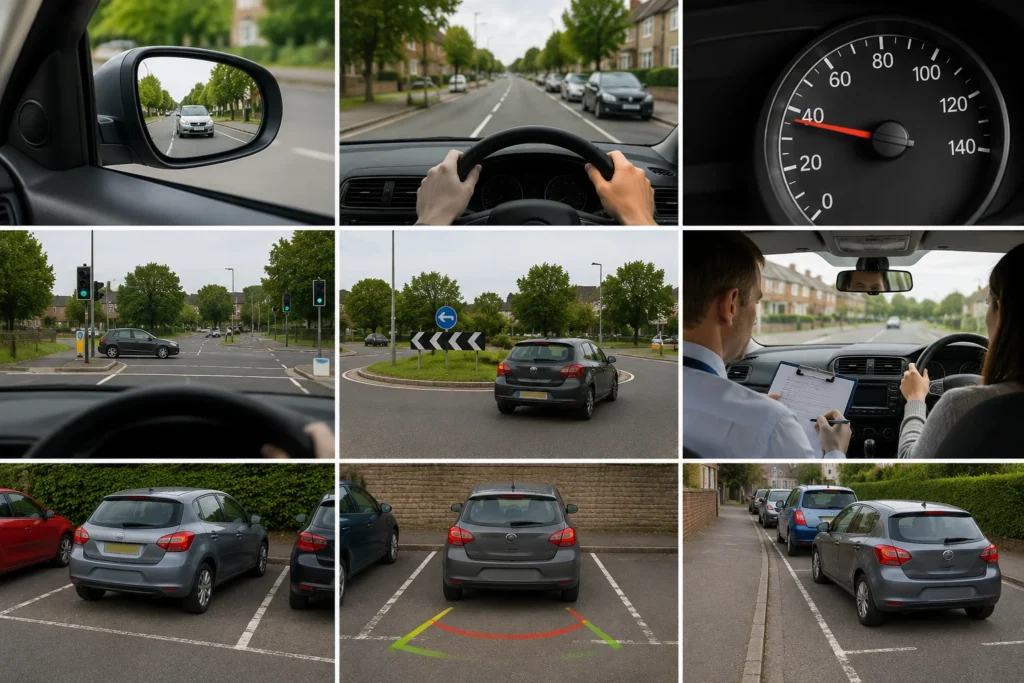
You’ll be assessed on normal everyday driving situations like junctions, roundabouts, pedestrian awareness, and general control of the car.
What They Really Watch During Driving
Most learners think the test is about avoiding mistakes completely. That’s not true. Small mistakes can happen. What matters is safety and control.
The examiner focuses on how you handle real driving situations such as:
- Checking mirrors before changing direction
- Keeping proper lane position
- Controlling speed in different areas
- Reacting safely at junctions
- Handling roundabouts without confusion
- Parking and reversing with awareness
You might also be asked to complete one reversing exercise. It could be bay parking, parallel parking, or pulling up on the right side of the road.
Nothing here is random. It’s all things you’ve already practiced during lessons.
Independent Driving Part
At some point in the test, you’ll do independent driving. This usually lasts around 20 minutes.
You might be asked to:
- Follow road signs
- Or follow directions from a sat nav
This part is not about getting everything perfect. It’s about showing that you can make safe decisions without constant help.
If you miss a direction, it’s not an instant fail. You just calmly adjust and continue safely.
Mistakes That Catch Learners Out
Most test failures are not because someone “can’t drive.” It’s usually small habits under pressure.
Some common issues include:
- Not checking mirrors at the right time
- Overthinking and hesitating too long
- Poor lane positioning at roundabouts
- Incorrect speed control in slow areas
- Missing early road signs
These things usually improve a lot with calm thinking and regular practice before the test.
Staying Calm on the Day
Nerves are completely normal. Even confident learners feel them. The goal isn’t to remove nerves completely—it’s to not let them control you.
A few simple habits help more than anything else:
- Don’t over-practice right before the test
- Arrive early so you’re not rushing
- Keep breathing slow and steady
- Focus only on what’s happening now
- Don’t replay mistakes in your head
Once the car starts moving, most nerves naturally settle down anyway.
After the Test Finishes
When the driving is done, the examiner will pull you over safely and tell you the result.
It will be one of two outcomes:
- You pass the test
- Or you don’t pass this time and get feedback
If you pass, you’ll get your result and instructions for the next steps toward your full licence.
If you don’t pass, it can feel disappointing, but it’s very common. Most learners improve quickly after feedback because they now know exactly what to fix.
Final Thoughts
The Stoke-on-Trent DVSA test centre isn’t there to trick you or make things difficult. It’s simply a place where your everyday driving ability is checked in a real-road situation.
If you’ve practiced properly and stay calm on the day, you already have a strong chance of doing well. The test is not about being perfect—it’s about being safe, aware, and confident enough to handle normal traffic.
Drive like you’ve been taught, don’t rush yourself, and trust your practice. That’s usually what makes the difference.